What You Delete Becomes Part of the Story: Lessons From a Shoebox Full of Cassette Tapes
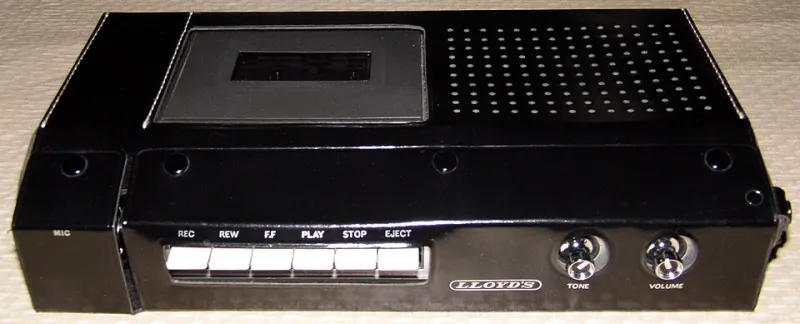
Photo: Joe Haupt from USA, CC BY-SA 2.0, via Wikimedia Commons
There's a shoebox in my parents' closet in Ohio that contains, as far as I know, the only surviving audio of my grandmother telling stories. It's not a clean archive. It's a mess of cassette tapes recorded on a bulky Sears recorder from the early seventies, and the thing about that machine — the thing that ended up shaping how I think about creative work — is that editing on it was brutal.
You couldn't trim. You couldn't drag and drop. If you wanted to remove something, you recorded over it. If you wanted to fix a sentence, you had to re-record the whole take and hope you got it right. The result is a collection of tapes with hard stops, sudden restarts, and long stretches where my grandmother audibly decided she'd said something wrong and started over mid-breath.
As a kid, I thought the tapes were broken. As an adult who makes things for a living, I've come to see them as the most honest editing masterclass I ever sat through.
The Gaps Are Doing Work
Here's what struck me the first time I listened to those tapes as an adult: the deleted parts aren't gone. They're present. Every hard stop marks a decision. Every restart tells you my grandmother cared enough to try again. The silences where something used to be are arguably the most expressive moments on the entire tape.
We tend to think of editing as subtraction — you cut the weak parts and what's left is the story. But listen to an old cassette and you realize something else: the cuts are part of the texture. The reader or listener never hears what you removed, but they feel the shape of the removal. A paragraph that starts abruptly carries the ghost of the sentence you killed. A scene that ends early has the fingerprints of everything you decided wasn't needed.
I think about this constantly when I'm working on a draft. Not "what should go?" but "what will the absence feel like?"
Editing as a Choice, Not a Chore
Most advice about editing treats it like janitorial work. Clean up the typos, trim the fluff, ship it. Fine. But that framing makes cutting feel like a loss, and when cutting feels like a loss, creators get precious. They keep everything. Their drafts folders become mausoleums of good-enough takes that were never allowed to die.
My grandmother didn't have that luxury. The tape was finite — usually sixty minutes, sometimes less. Every minute she kept was a minute she couldn't use for something else. So she cut with conviction. If a story wandered, she stopped and told it tighter. If a memory didn't land, she moved on to the next one.
Constraint made her decisive. And decisiveness, I'd argue, is the actual skill. Not taste, not grammar, not an ear for rhythm — those help, but the core of editing is being willing to say "this version existed, and now it doesn't."
The Tape Recorder Test
Over the years this has turned into a practical check I run before publishing anything, and I've started calling it the tape recorder test. Three questions, in order:
1. If I could only record over one section, which would it be? Not which section is worst — which one would I sacrifice first if tape were finite. If the answer is "none, it's all essential," I'm not done editing. I'm attached.
2. Where would a listener hear the splice? On the old tapes, you always knew where a restart happened. In writing, the equivalent is asking where a reader would feel a seam — the paragraph that works but feels slightly disconnected, the joke that exists because the original one failed. Sometimes the seam is a problem. Sometimes it's the most alive part of the piece. Either way, you should know where your splices are.
3. Am I keeping this because it's good, or because I remember it being hard to write? This one stings. Some of the worst things I've published survived because I'd fought for them. Effort is not an argument. My grandmother never once kept a take because it had been difficult to record.
A Caveat About the Shoebox
I want to be careful here, because the obvious reading of this piece is "cut ruthlessly, trust the reader, less is more" — and that's true, but it's not the whole truth. Those tapes also taught me the opposite lesson.
Because editing on that machine was destructive, my grandmother occasionally over-corrected. She'd rerecord a story to fix one clunky line and, in doing so, flatten the spontaneity that made the original good. There's a version of her story about meeting my grandfather — the original had her laughing halfway through, barely able to finish it — that exists only as a ten-second fragment before she restarted and told it "properly." The proper version is fine. The fragment is better.
So the full lesson isn't cut everything. It's that every cut is a creative act with consequences, and you should make those acts deliberately rather than by default. Edit like tape is finite, but know that some accidental takes are the best ones. The trick is being able to tell the difference, and honestly, some days I still can't.
What's Left After Everything Left
The tapes I love most aren't the polished ones. They're the ones with the most evidence of process — the restarts, the sighs, the mid-sentence pivots. My grandmother's voice is most alive in the moments she was deciding.
That's the paradox I keep circling: editing is invisible by definition, but the quality of your editing shows in everything. Readers can't name what you removed, but they can feel the confidence of a piece that knows why it contains what it contains. Every good story is a recording of decisions — including the decisions to stop.
So before you hit publish on the next thing, run it through the test. Find the section you'd record over. Find your splices. Then cut like the tape is running out — because, well, it always is.
And maybe keep the shoebox. Future you will want to hear the outtakes.