The Time-Loop Problem: Why My Best Work Is About a Version of Me That Doesn't Exist Yet
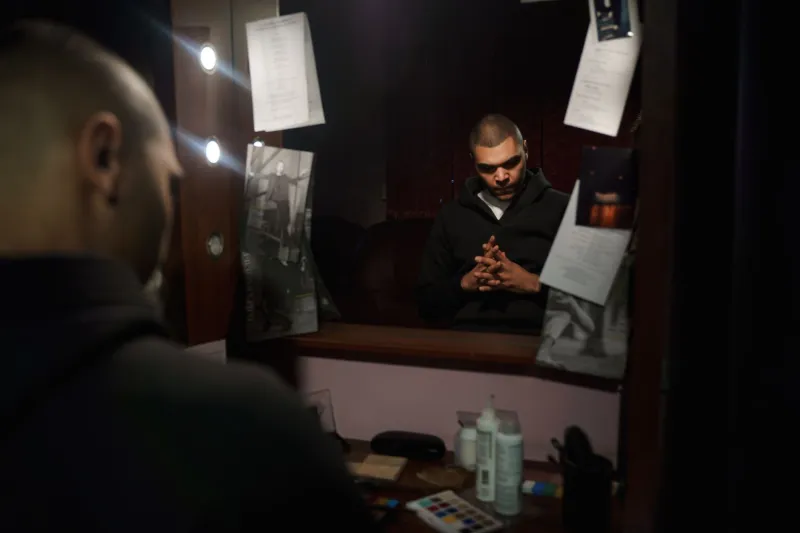
A few years ago, I wrote a one-man show about a guy in his early twenties trying to make it in a city that didn't care about him. It got decent laughs. A couple of people cried, which I counted as a win. And every single night, standing in the wings before the lights came up, I felt like a fraud — because the character on stage was worried about things I'd already stopped worrying about.
I was playing my past self like a cover song. Note for note, but the meaning had shifted.
That's the thing nobody tells you about personal work: the person telling the story and the person in the story are almost never the same person. And the distance between them? That's not a bug. That's the whole material.
Three Versions, One Project
When I look back at the stuff I've made — the shows, the essays, the half-finished scripts rotting in a drawer somewhere in Chicago — each one seems to be doing one of three things.
Some projects are postcards from the past. You write about the breakup, the move, the year everything fell apart. By the time anyone reads it, you've already processed it. The art is a receipt for healing that happened offstage.
Some projects are time capsules of the present. You're mid-struggle, documenting in real time, and the work is messy because you're messy. These are usually the pieces that feel the most alive and the most terrifying to publish.
And then there's the third kind — the one that kept me up at night. The projects about who you're trying to become. The novel about the father you hope to be someday. The business built on confidence you haven't fully earned yet. You're not documenting life. You're rehearsing it.
I spent years thinking the third kind was dishonest. Like I was cosplaying a person I wasn't. Then I realized something: every character I've ever played was me at a different age. Sometimes behind me. Sometimes way ahead. And the performance wasn't a lie — it was a rehearsal.
The Gap Is Where the Good Stuff Lives
Here's the practical takeaway, because I know some of you are skimming between meetings.
The most honest material in your work isn't the perfectly lived experience or the aspirational fantasy. It's the seam between the two — the place where you can feel yourself stretching. Audiences can smell a fully resolved story from a mile away. It's tidy. It's dead. What they respond to is the wobble: the writer who's figured out the lesson but hasn't fully moved into it yet.
Think about the podcasts and memoirs that actually hit you. They're rarely from people with everything figured out. They're from people three feet past the finish line, still catching their breath, telling you what the race looked like from inside it.
So when you sit down to make something personal, don't ask "Is this true?" or "Is this who I am?" Ask a better question: where am I in relation to this story right now? Behind it? Inside it? Ahead of it? Name the distance. Write from there.
Rehearsing Your Future Self, Out Loud
There's a weird permission slip hidden in all this. If art can be rehearsal, then you're allowed to make work about the person you're becoming — even before the evidence shows up.
I know a guy in Austin who started a newsletter about running marathons before he'd run a single one. Documented the training from day zero. By the time he crossed his first finish line, he had two thousand people invested in the story. Was he performing an identity? Sure. But the performance is what got him to the starting line. The story made the runner.
That's not faking it till you make it. That's making it by telling it.
The catch — and there's always a catch — is that you have to stay honest about the timeline. Rehearsal becomes delusion the moment you stop updating the story to match reality. The guy writing about the marathon he hasn't run is inspiring. The guy still writing about it three years later is avoiding his running shoes.
So Which One Is It?
Does your work document who you were, who you are, or who you're performing?
Yes. All three. Usually in the same paragraph.
The trick is to stop treating that as a contradiction and start treating it as a signature. Every creator has a time-loop problem — we're always writing from a slightly different vantage point than the story occupies. Stop trying to close the gap. Stand in it. Look around. That's where the interesting stuff is hiding.
And if you catch yourself playing a character who's a decade older or younger than you actually are? Good. That's not a casting error.
That's just you, getting to know all the versions of yourself — one story at a time.