Two Hundred People Cheered. One Guy Yawned. Guess Which One I Remembered.
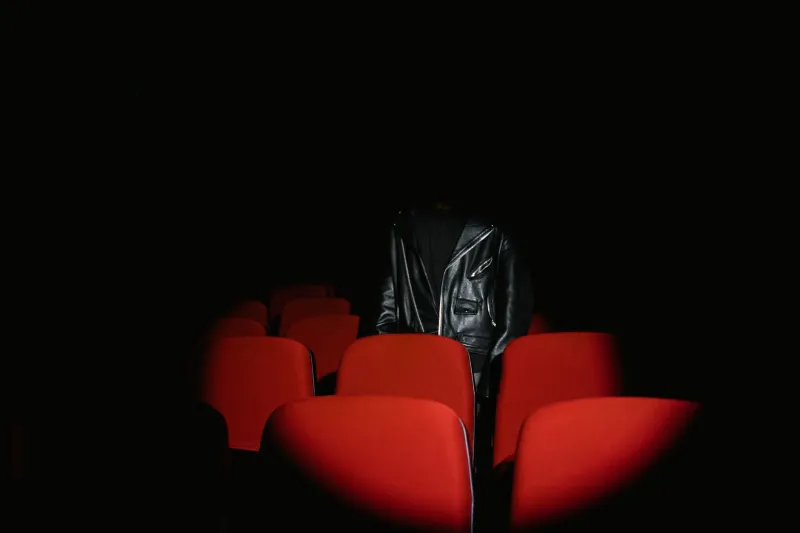
Last spring I did a twenty-minute storytelling set at a small venue here in Chicago. Maybe 200 people in the room. It went well — genuinely well. People laughed where they were supposed to laugh, a stranger bought me a drink at intermission, and a woman in her seventies told me the second story reminded her of her father.
So naturally, on the drive home, I spent forty-five minutes thinking about the guy in the back row who checked his phone and left early.
The Yawn Weighs More Than the Applause
If you've created anything and put it in front of humans, you know this feeling. Ninety-eight percent of the response is positive and your brain files that under "fine, whatever." The two percent that's lukewarm or cruel? That gets its own documentary series in your head, running on loop until 2 a.m.
It's not a character flaw. It's wiring. Psychologists have known for decades that negative information sticks harder than positive information — some researchers estimate it takes five good experiences to outweigh one bad one. For creators, that math is brutal, because the bad ones are always the loudest and always the most memorable.
Theater figured this out a long time ago, by the way. Every performer knows about "the one bad review" phenomenon. A show can run for a year to sold-out houses, and the artistic director can quote the single scathing notice word for word. Live audiences and comment sections work the same way: the room is never a monolith, but we treat the crank in row Z as the room's official spokesperson.
Not All Feedback Is Created Equal
Here's the thing I had to accept: the guy who left early wasn't wrong for being unimpressed. He just wasn't my audience. And that's a distinction most of us never bother to make because we're too busy absorbing everything.
When I started actually sorting the feedback I received, three categories emerged:
Feedback from people who know the work. Fellow storytellers, editors, that friend who's seen me bomb and soar. When these people critique, they usually know what they're critiquing. Listen hard here.
Feedback from people who know me. My mom loves everything I do. That's lovely and useless as criticism. Not a knock on her — it's just not data.
Feedback from strangers passing through. The phone-checker. The drive-by commenter. The person who was having a bad day before they ever walked in. This is weather, not climate. Thank it and move on.
Most of us give all three categories equal weight, which is like asking your barber to review your tax returns.
The Question That Changed How I Take Notes
A director I worked with once gave me a line I now use constantly: "Is this person critiquing the work, or describing themselves?"
Run your harshest feedback through that filter. Half the time, the nasty comment tells you more about the commenter than the creation. The person who says "this is derivative" might be frustrated with their own stalled projects. The one who says "nobody cares about this stuff" is often announcing their own exhaustion, not predicting your fate.
That's not a license to dismiss all criticism — some of it is dead-on and you need to hear it. But there's a difference between criticism that costs the critic something (they engaged, they thought, they wanted it to be better) and criticism that's just a drive-by. The first kind deserves a seat at your table. The second deserves a wave from the porch.
A Practical Filter, Not a Thick Skin
"Develop a thick skin" is terrible advice, because it implies the goal is feeling nothing. The goal isn't numbness — it's calibration. Here's the system I actually use now:
- The 24-hour rule. No feedback gets processed the day it arrives. Time doesn't make criticism softer; it makes it clearer.
- Name the source. Before reacting, I write down who said it and whether they fall into category one, two, or three above.
- Find the pattern. One person's complaint is an opinion. Five people independently saying the middle drags? That's a note. Single data points are anecdotes; patterns are information.
- Say thank you out loud. Even to the trolls, even just in your head. It sounds cheesy, but gratitude is a door-close. It signals to your brain: received, filed, done.
The Back Row Doesn't Get a Vote on Your Story
Look, I still think about that guy sometimes. Probably always will. But I've stopped letting him drive.
The standing ovation problem isn't that critics exist — they always will, and the useful ones are a gift. The problem is that we hand the microphone to the one voice least equipped to use it, while the people who actually showed up for us sit there waiting to be heard.
Two hundred people stood up. Start counting the right crowd.