Twelve Seconds of Airtime, Three Years of Context: The Soundbite That Followed Me Around
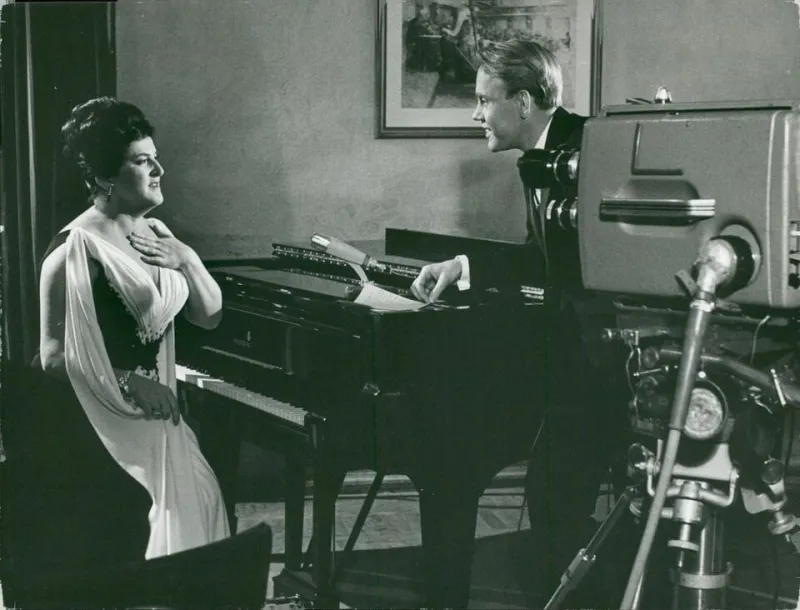
Photo: John Kjellström, Public domain, via Wikimedia Commons
A few years ago, a journalist interviewed me for about forty-five minutes. It was a good conversation — thoughtful questions, real back-and-forth, the kind of exchange where you leave feeling like you actually said something.
Twelve seconds of it aired.
I want to be clear: the reporter wasn't lazy and the edit wasn't malicious. Twelve seconds is what fit. But what those twelve seconds did to my story — and to how strangers treated me for the next two years — taught me more about public perception than any branding book ever could.
The Clip That Ate the Story
The segment ran in the evening. By the next morning, people who'd never spoken to me were congratulating me on things I'd never said. The quote they pulled — something breezy I tossed off as a transition sentence — became my official position on an entire craft. Forever, apparently.
Here's the compression problem in a nutshell: I gave forty-five minutes of nuance. The audience got one sentence of certainty. And certainty travels. "It's complicated" doesn't make the broadcast; "I always knew" does — even when the truth is you never knew anything, you just worked hard and got a little lucky.
When the Soundbite Becomes You
For a while, I fought it. In follow-up conversations, in emails, at parties, I'd find myself adding context: "Well, what I actually meant was—" And you know what happens when you do that? People's eyes glaze over. They didn't sign up for the forty-five-minute version. They signed up for the clip.
Eventually I noticed something stranger. I started performing the clip. I'd catch myself saying things because they sounded like the version of me people expected, smoothing my actual, messier thinking into soundbite shape. That's the real danger of compression — not that others misunderstand you, but that you start editing yourself to match the misunderstanding.
The public perception of you calcifies fast, and it calcifies around whatever fragment happened to survive the edit.
What I'd Do Differently
I don't blame media. Compression is the job. A forty-five-minute interview cannot air for forty-five minutes, and the reporter's obligation is to their audience's attention span, not to my nuance. Once I accepted that, a few practical things changed how I handle any kind of coverage:
Speak in complete thoughts. If a sentence can't stand alone, assume it won't be the one that stands.
Never say anything as a throwaway. There's no such thing as a throwaway on a microphone. Transitions become headlines.
Correct through creation, not clarification. Instead of chasing the misquote, I made work that made the fuller story impossible to miss. The best correction isn't a correction — it's a body of work.
Hold your own record. I keep archives of my process now — drafts, notes, the long version. Not for the public. For me. When the twelve-second version of me starts feeling real, I go read the forty-five-minute version.
The Version of You That Barely Exists
Here's the part I still think about. Somewhere out there is a version of me — confident, quotable, certain — built from twelve seconds of tape. People have been generous to that version. Some have been unfair to him. And he's not me. He's a shadow with my voice.
If you ever get a moment of attention, know this going in: the world will meet a fraction of you and treat it like the whole. You can't stop that. But you can refuse to become it. Keep the long version of yourself alive somewhere — in your work, your notebooks, your relationships with people who've seen the whole interview.
Twelve seconds can introduce you. It just can't be you. Don't let it.