Nobody Pays You to Birdwatch — and That's Exactly the Point
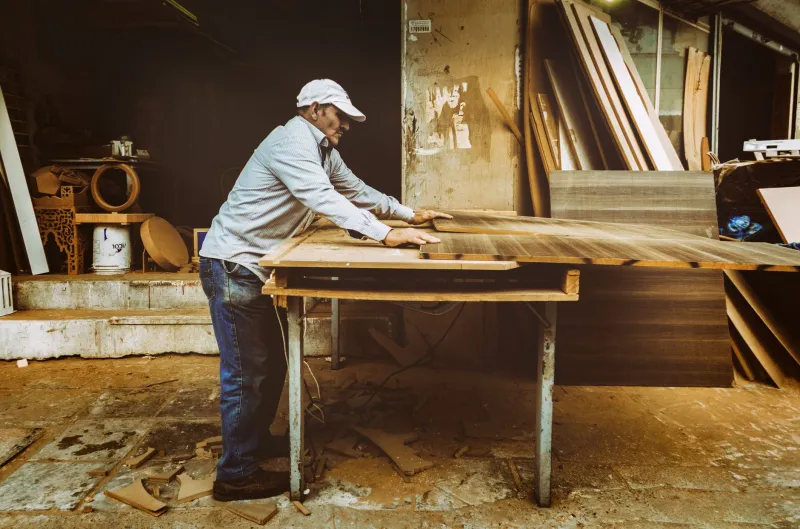
A few years ago, I got obsessed with woodworking. Not the influencer kind — no epoxy rivers, no YouTube channel, no Etsy shop waiting in the wings. I mean standing in a garage at 11 p.m. sanding a cutting board that had absolutely no reason to exist except that I wanted it to.
Around the same time, a friend asked me the question every creative person in America eventually hears: "Are you going to turn that into something?"
Something. As in, a business. A brand. A revenue stream.
I said no. And I meant it. But the question stuck with me, because it revealed something broken about how we think about creative work — specifically, the assumption that every interest must eventually justify itself on a spreadsheet.
The Monetization Trap We All Fell Into
Somewhere along the way, "hobby" became a dirty word. Now we have "side hustles," and the difference isn't just semantic. A hobby is something you do because it pulls at you. A side hustle is something you owe money to.
The pressure is real and it's everywhere. Start a newsletter about your cooking. Turn your film photography into a print shop. If you're good at something, the internet says, you're leaving money on the table by not selling it.
Here's what nobody tells you: the moment you monetize a pursuit, you change your relationship with it. Deadlines replace curiosity. Metrics replace play. The thing that used to refill your tank becomes another thing draining it.
I've watched this happen to talented people over and over. Their sketchbook becomes content. Their kitchen becomes a brand. And slowly, the joy gets squeezed out — not because they failed, but because they succeeded at turning everything into work.
What the Garage Taught Me About the Desk
So let me make the actual argument: your seemingly pointless passions are making your main work better, even when — especially when — there's no obvious connection.
Woodworking taught me things writing never could. It taught me that mistakes are physical. You cut the board wrong, you don't have a draft two — you have kindling. That finality changed how I approach first drafts. I stopped treating every sentence like it was precious and started treating the work like lumber: raw material, meant to be shaped, sometimes sacrificed.
It taught me patience in a way that's hard to fake. Wood doesn't rush. Glue dries when it dries. Finishes cure on their own schedule. In a world where we expect creative output on demand, there's something quietly radical about a process that simply cannot be hurried.
And it taught me to look at joinery — the hidden connections inside a piece — and ask what's holding my own work together underneath the surface.
The Side Quest Effect
I've started calling these pursuits "side quests," borrowed from video games. In a good open-world game, the main story is fine, but the side quests are where you stumble onto the weird stuff — the characters, the detours, the things that end up mattering more than the plot.
Creative work works the same way. The novelist who gardens learns about slow growth and things dying on schedule. The designer who cooks understands that constraint breeds flavor. The filmmaker who birdwatches develops a patience for stillness and an eye for movement that no film school teaches.
These connections aren't metaphors I'm inventing for a nice essay. They're the actual mechanism. Your brain makes associations across domains that it can't make within one. The writer who only reads writers starts sounding like other writers. The one who also builds furniture, watches birds, or butchers their own cuts of meat? They bring material nobody else has.
Protecting the Unproductive
If I could hand every creative person one permission slip, it would be this: you are allowed to have one thing in your life that produces absolutely nothing.
No portfolio. No Instagram grid. No "someday" business plan. Just an activity you do with your hands and heart because it makes the hours pass differently.
A few rules I've found helpful:
Keep it offline by default. The moment you're performing it, you're no longer doing it for yourself.
Resist the origin story. Not everything needs to feed the newsletter. Some things can just be yours.
Notice what it changes. Not what it produces — what it changes in you. That's where the real return hides.
The Long Game
Here's the thing about side quests: they don't pay off immediately, and they almost never pay off in the way you'd predict. But over years, they compound. They give you texture. They give you stories. They give you the particular kind of confidence that comes from being a beginner at something with zero stakes.
The cutting boards pile up in my garage. Some are decent. Most are crooked in ways only I would notice. And every single one of them has shown up, somehow, in work that has nothing to do with wood.
So pick up the thing you keep apologizing for. The birdwatching. The bread baking. The banjo gathering dust in the corner. It's not a distraction from your real work.
It might be the reason your real work still has any life in it.